
Uganda’s leather industry received a significant boost following the establishment of a modern leather tailoring and production facility by the Turkish Cooperation and Coordination Agency (TİKA) at the Islamic University in Uganda (IUIU), Kampala Campus. The initiative seeks to strengthen vocational training, promote value addition and equip young Ugandans with practical skills to participate in the growing leather manufacturing sector.
The facility, established through cooperation between TİKA and IUIU, is equipped with advanced machinery designed to provide hands-on training in leather processing, tailoring and product development. Students can acquire technical expertise in manufacturing a range of leather products, including shoes, handbags, wallets and belts.
By integrating traditional craftsmanship with modern production technologies and innovative designs, the project aims to improve product quality, enhance competitiveness and enable aspiring entrepreneurs to manufacture leather goods that meet international market standards.
Beyond technical training, the initiative is expected to create opportunities for youth entrepreneurship, employment and small business development. Students will gain practical production experience while developing the creativity, business skills and technical capabilities necessary to establish sustainable enterprises within Uganda’s leather value chain.
The investment forms part of Türkiye’s broader development cooperation with Uganda, particularly in education, healthcare, vocational training, technical capacity building and knowledge transfer.
The project also highlights the importance of value addition in Africa’s leather industry, where greater investment in modern manufacturing equipment, 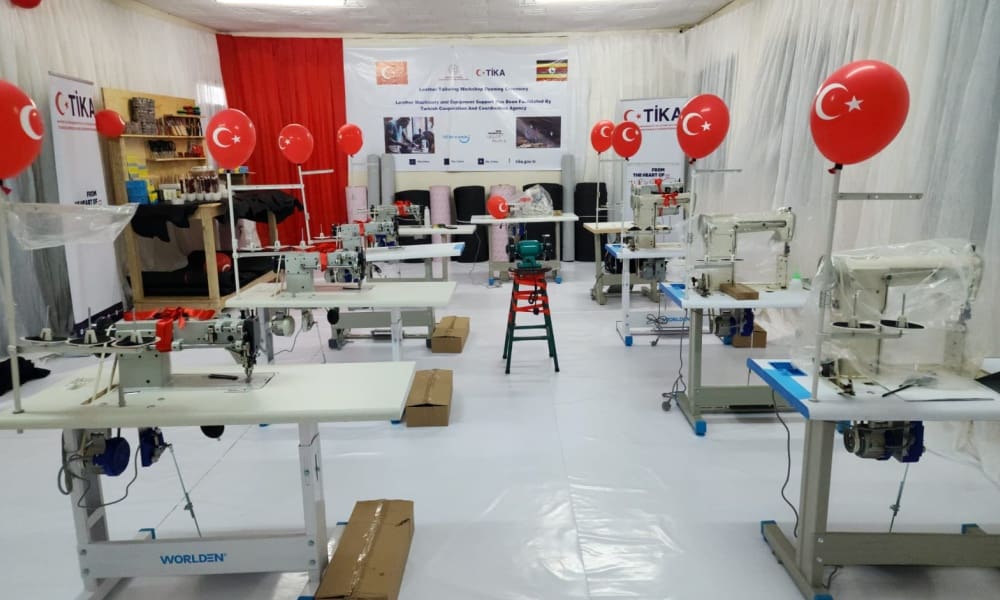 and product innovation could help countries move away from exporting raw hides and skins towards producing higher-value finished leather goods.
By strengthening technical expertise and local manufacturing capacity, the facility represents an opportunity for Uganda to expand domestic production, reduce dependence on imported finished leather products and explore new markets within the East African Community and beyond.
The initiative demonstrates how international development partnerships can support industrialisation, empower young entrepreneurs and unlock the economic potential of Africa’s leather sector.