
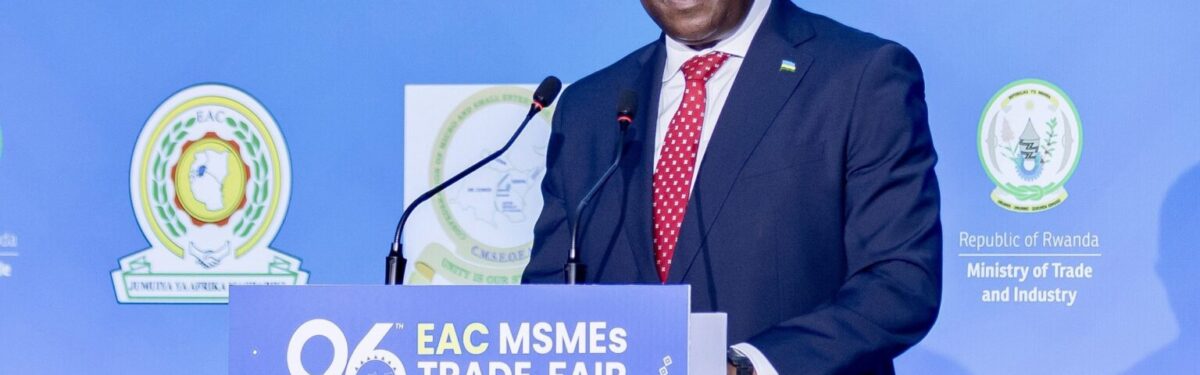
Rwanda’s Prime Minister, Dr. Justin Nsengiyumva, has called on East African Community (EAC) member states to accelerate investment in leather processing and manufacturing to unlock the sector’s economic potential, create employment and strengthen the region’s competitiveness in international markets.
Speaking during the official opening of the 26th EAC Micro, Small and Medium Enterprises (MSMEs) Trade Fair at the Gikondo Expo Grounds in Kigali, Rwanda, on November 3, 2026, Dr. Nsengiyumva emphasized the need for the region to shift from exporting raw hides and skins towards producing finished, high-value leather products.
He noted that expanding domestic processing capacity would enable East African countries to retain more value from their raw materials, stimulate industrial growth and establish competitive manufacturing industries capable of supplying both regional and global markets.
The Prime Minister particularly highlighted opportunities in footwear manufacturing and other leather products, urging governments and private sector players to invest in modern processing technologies, industrial infrastructure and stronger regional value chains.
Dr. Nsengiyumva further challenged businesses to embrace the EAC as an integrated economic market rather than operating within individual national boundaries. He observed that stronger cross-border partnerships would enable enterprises to expand production, access larger consumer markets and enhance their competitiveness.
Recognizing the critical contribution of MSMEs to economic development, he encouraged manufacturers, hospitality establishments and large businesses to incorporate smaller enterprises into their procurement and supply chains. He also called on financial institutions to introduce affordable and flexible financing solutions tailored to MSMEs.
However, he acknowledged that limited and persistent non-tariff barriers continue to constrain regional trade and business expansion. Addressing these challenges, he stressed, would require coordinated policy reforms, improved transport infrastructure and increased investment in enterprise development.
The trade fair, running from October 30 to November 8, 2026, places particular emphasis on strengthening regional value chains in leather and horticulture, including fruits, vegetables and flowers.
The event provides a platform for entrepreneurs across East Africa to showcase products, establish commercial partnerships, access new markets and explore opportunities for cross-border investment.
Strengthening local leather processing represents a significant opportunity for East Africa to reduce dependence on imported finished products, promote industrialization, generate employment and position the region as a competitive manufacturing hub.