
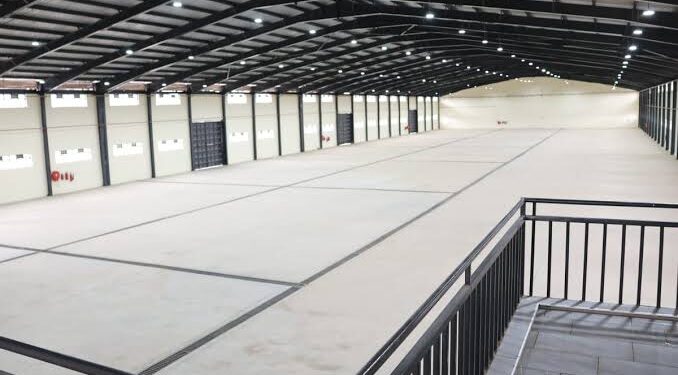
Kenya is positioning itself as a major contender in the global leather trade following plans to establish a cutting-edge, Ksh 5 billion testing laboratory at the Kenanie Leather Industrial Park.
Funded through a partnership with the Italian government, the state-of-the-art facility is designed to test and accredit Kenyan leather products to rigorous international standards. Once operational, the lab will allow local manufacturers to secure compliance for export into lucrative markets across the European Union, the United States, China, India, and the wider East African Community (EAC) without needing to set up costly private verification facilities.
Industrialization Principal Secretary Dr. Juma Mukhwana announced the development during an investor tour of the facility, stressing that the lab marks a turning point in accelerating the country’s long-delayed ambitions for the sector.
“We want to create a glass lab to international standards, so that it’s able to test and approve leather products for global markets,” Dr. Mukhwana stated, adding that investors will be spared the burden of building individual testing hubs.
The initiative comes amid growing government pressure to revitalize the Kenanie Leather Industrial Park, which has faced significant delays and stagnation since its inception in 2016. Challenging the Kenya Leather Development Council (KLDC) to produce tangible results, Dr. Mukhwana noted that Kenya’s vibrant livestock base has historically been undercut by a disorganized local value chain, forcing small manufacturers to import finished leather.
Drawing comparisons with Egypt which successfully established over 200 tanneries within a decade—the Principal Secretary underscored that Kenya must transition from planning to aggressive execution.
To make the industrial park fully attractive to investors, the government has ramped up foundational infrastructure improvements, including expanded road networks, stable power, water supplies, and security installations. Future masterplans for the zone also incorporate residential housing, educational institutions, healthcare facilities, and recreational spaces to accommodate workers and residents.
International and local stakeholders have welcomed the renewed push. Shun Qiang Cui, an investor from Hong Kong with over two decades of partnership in Kenya’s leather sector, expressed optimism over the growth trajectory. Meanwhile, Kennedy Waiyaki, Director of ReaLeather Limited, called on authorities to maintain favorable, private-sector-friendly taxation policies to sustain investor momentum.
The Kenanie facility is strategically positioned to serve not only Kenyan domestic demand but also eight regional markets, including Uganda, Tanzania, South Sudan, Somalia, Burundi, and the Democratic Republic of Congo (DRC), cementing Kenya’s readiness to capture a larger share of the multi-billion-dollar global leather industry.