
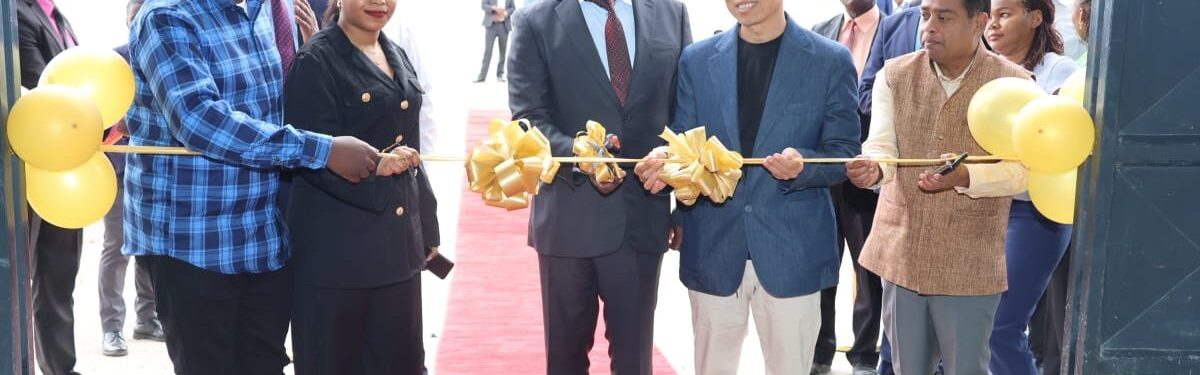
The long-awaited transformation of Kenya’s leather manufacturing sector took a monumental leap forward as the government officially commissioned and handed over the first warehouse at the Kenya Leather Industrial Park in Kinanie, to its pioneer private investor.
Industrialization Principal Secretary Dr. Juma Mukhwana officiated the handover ceremony, presenting the facility to Realeather Limited, a firm that has injected USD 4 million into the project in partnership with Hong Kong-based Jashon International Group.
Challenging the firm to immediately set up machinery and commence operations, Dr. Mukhwana underscored the urgent need to bridge a widening gap in local leather production.
“There is a shortage since we don’t have enough leather for the Kenyan market and so we urge the investor to start immediately to bring in the machines and workforce,” Dr. Mukhwana said, emphasizing that scaled-up production will target domestic consumption, the wider East African Community (EAC) market, and international trade.
Realeather Limited Director Kennedy Waiyaki revealed that the newly acquired facility will specialize in producing suede leather, shoes, leather gloves, and diverse accessories. The plant is expected to immediately create 200 jobs upon startup, scaling to more than 500 employment opportunities as production expands.
Waiyaki cited the park’s expansive layout, conducive operating environment, and favorable government investment frameworks as key drivers behind the firm’s decision to anchor its regional hub in Kinanie.
During his inspection tour of the grounds, Dr. Mukhwana reviewed a suite of supporting infrastructure designed to de-risk investments within the zone, including:
-
An administration and service block nearing completion, which will house the Kenya Bureau of Standards (KEBS), Kenya Revenue Authority (KRA), Export Processing Zones Authority (EPZA), commercial banks, and dining facilities under one roof.
-
A dedicated police station under construction to guarantee security on-site.
-
Essential utilities and eco-facilities, including a modern power substation and a centralized effluent treatment plant (ETP).
According to Kenya Leather Development Council (KLDC) CEO Jimmy Odhiambo, the operationalization of the park marks a transformative shift away from raw hide exports toward domestic value addition, promising lower import expenditures and sustainable economic growth for local communities.